
From Pirogues to Kitefoil
How sailing in Mauritius evolved from working craft, regattas and maritime heritage into international ocean racing, wind sports and Olympic competition.

Sailing has always been part of Mauritius. What changed was not the relationship with wind and water, but the forms it took — from traditional pirogues and working boats to organised regattas, ocean racing, kitesurfing and Olympic kitefoil.
An island whose history was written from the water.
Mauritius sits in the Indian Ocean at the intersection of maritime routes, coastal communities and strong trade winds. Its sailing story reaches well beyond leisure. It touches naval history, fishing, transport, sport, tourism, technology and identity.
The equipment changed. The competitions changed. The technology changed. The relationship between Mauritius, wind and water remained.
Moments that shaped the scene.
This is not a complete history of sailing in Mauritius. It is a selection of moments that show how local maritime culture moved from necessity and heritage into organised sport and international competition.
Grand Port enters naval history
The waters of Grand Port were the setting for the Battle of Grand Port, fought from 20–27 August 1810 between French and British naval forces during the Napoleonic Wars. The event remains one of the most important maritime episodes in Mauritian history and is preserved today through the National History Museum in Mahébourg.
The Mahébourg regatta tradition takes shape
Traditional pirogue regattas in Mauritius are traced to 1874, when sailing enthusiasts established the Mahébourg Yacht Club. The races became community events in their own right, with brightly coloured sails, local crews and crowds gathering along the shoreline. The tradition survives as one of the clearest links between working boats and organised sailing culture.
Working knowledge becomes sporting culture
Across coastal Mauritius, sailing knowledge was carried through fishermen, families, clubs and boat owners. Over time, the same practical understanding of wind, lagoons and seamanship supported a broader recreational and competitive sailing culture.
Mauritius becomes a destination for ocean sailors
The island’s role expanded from local sailing ground to international stopover and destination. Ocean racing, cruising yachts, charter activity and international sailing visitors added new layers to an already established maritime culture.
Wind sports redraw the meaning of sailing
Windsurfing, kitesurfing, wingfoil and kitefoil extended sailing beyond conventional boats. Places such as Le Morne and Anse La Raie became part of an increasingly international wind-sport scene, bringing a younger and more global audience into Mauritian sailing.
The pirogue never became a museum piece.
One of the most important things about Mauritian sailing history is that it remains visible. Traditional pirogue racing still forms part of cultural events in Mahébourg, where colourful sails, local crews and community support keep an old practice connected to the present.

From livelihood to celebration
Traditional pirogues were practical coastal craft. In regatta form they also became sporting machines, symbols of local skill and a focal point for community gatherings.
The significance is not nostalgia alone. Regattas show that sailing in Mauritius grew from local knowledge rather than being imported purely as a leisure activity.
From lagoon racing to international waters.
Modern Mauritian sailing now operates across several scales — community sailing inside the lagoon, ocean passages, international competition and professional wind sports.

Ocean racing arrives in Mauritius
Round-the-world and offshore events have placed Mauritius within a global sailing network. Globe40 was among the races to bring international Class40 crews to the island, showing how Mauritius can function not only as a maritime destination but as part of the international racing calendar.
The contrast is striking: traditional pirogues racing at Mahébourg on one side of the story, and high-performance ocean yachts arriving after thousands of nautical miles on the other.
When sailing began to fly.
Kitefoil changed the visual language of sailing. Instead of a hull moving through the water, athletes rise onto hydrofoils and travel at speeds that place Formula Kite among the fastest disciplines in modern Olympic sailing.
Formula Kite entered the Olympic sailing programme for the first time.
Mauritian Formula Kite athletes qualified for Paris 2024.
From documented regatta heritage to Olympic foiling competition.
Julie Paturau and Jean de Falbaire.
Formula Kite’s Olympic debut gave Mauritius a modern milestone: two Mauritian athletes qualified for the new sailing discipline and represented the country at Paris 2024.
Julie Paturau
Julie Paturau qualified Mauritius for the women’s Formula Kite event through the African qualification pathway and went on to compete at Paris 2024. Her story also carries a family connection: her mother, Pascale, represented Mauritius in windsurfing at Barcelona 1992.
That progression — windsurfing in one generation, kitefoil in the next — captures the technological evolution of sailing particularly well.
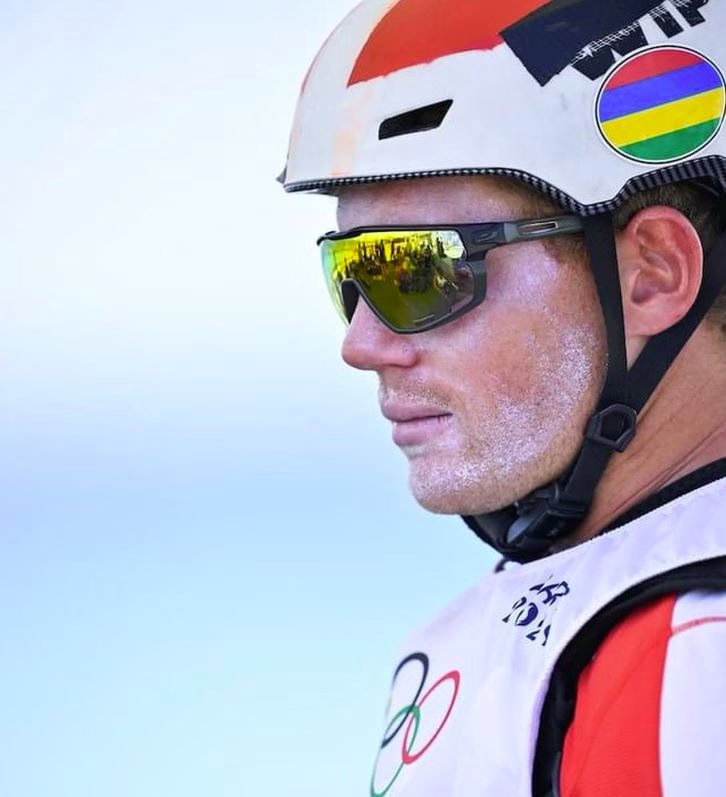
Jean de Falbaire
Jean de Falbaire secured Mauritius’ men’s Formula Kite qualification and represented the island in the Olympic sailing competition. A multiple African champion, his progression reflects how Mauritius has moved from being known for good wind conditions to producing athletes capable of competing on the international stage.
Louka Pitot and a generation raised by the wind.
Mauritian rider Louka Pitot became a two-time Junior World Champion and built an international career across freestyle kitesurfing, wing foil and foil surfing.
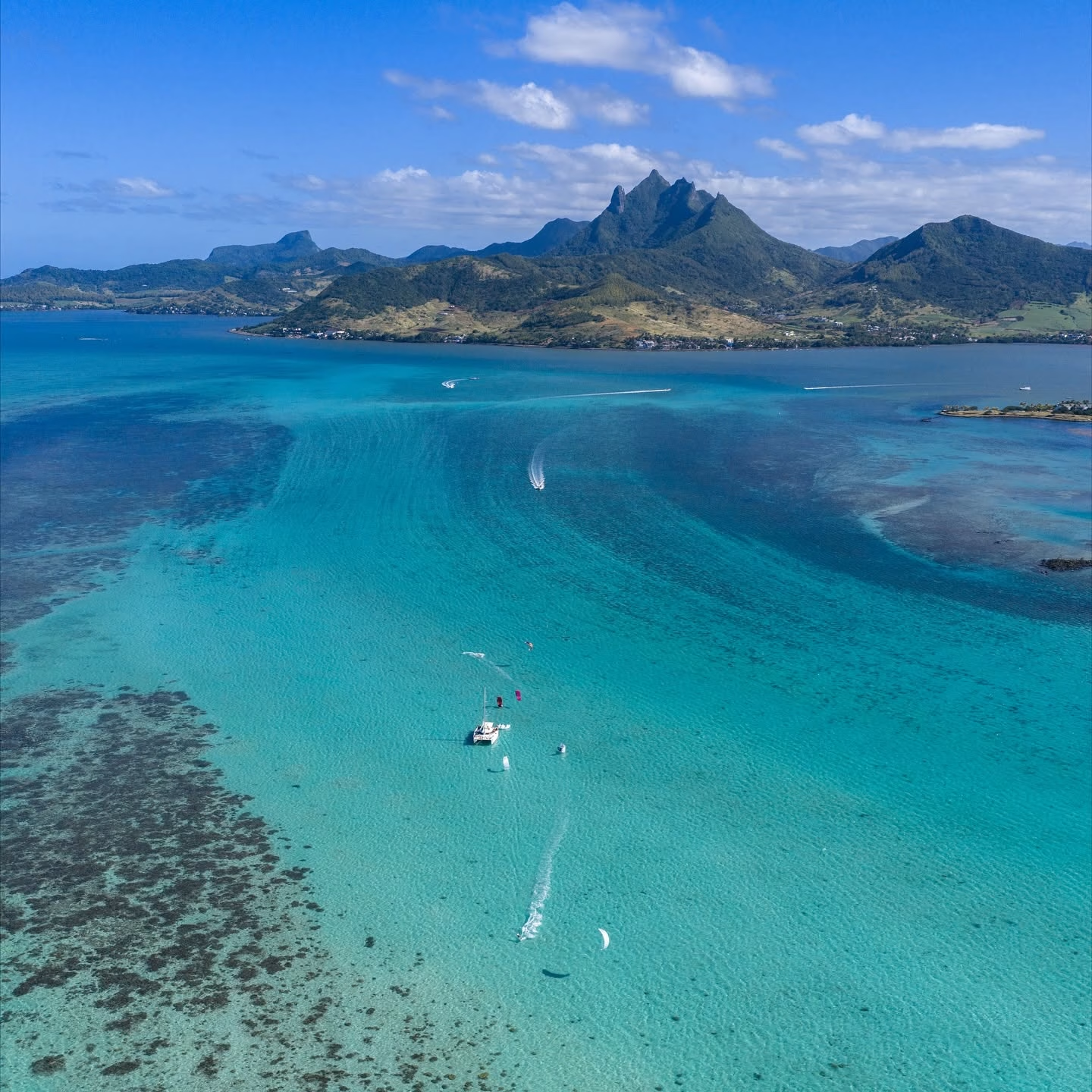
From lagoon sessions to world titles
Pitot’s path began in Mauritius and progressed into international freestyle competition. His success demonstrates another direction in which the island’s sailing identity has expanded: wind-powered sport now connects local lagoons with global competition, sponsorship and professional careers.
Alongside the Olympic kitefoil generation, freestyle riders show that modern Mauritian sailing is no longer defined by one type of craft or one type of race.
The scene became wider without losing its roots.
Today’s sailing community includes traditional pirogue crews, dinghy sailors, yacht owners, clubs, sailing schools, charter skippers, windsurfers, kitesurfers, foilers, marine businesses and young athletes learning their first skills on the water.
Heritage
Pirogues, regattas, coastal knowledge and the traditions carried by local communities.
Participation
Schools, clubs, charters, tourism, recreation and access to the water.
Performance
Windsurfing, kiteboarding, foiling, international events and Olympic competition.
Sailing never left Mauritius. It evolved.
The next chapter is the community sailing now.
The history continues through today’s sailing schools, clubs, instructors, kite schools, skippers, maritime organisations, businesses and community groups.

Maritime Directory
Explore the businesses and organisations active around the water today.
Browse the directory →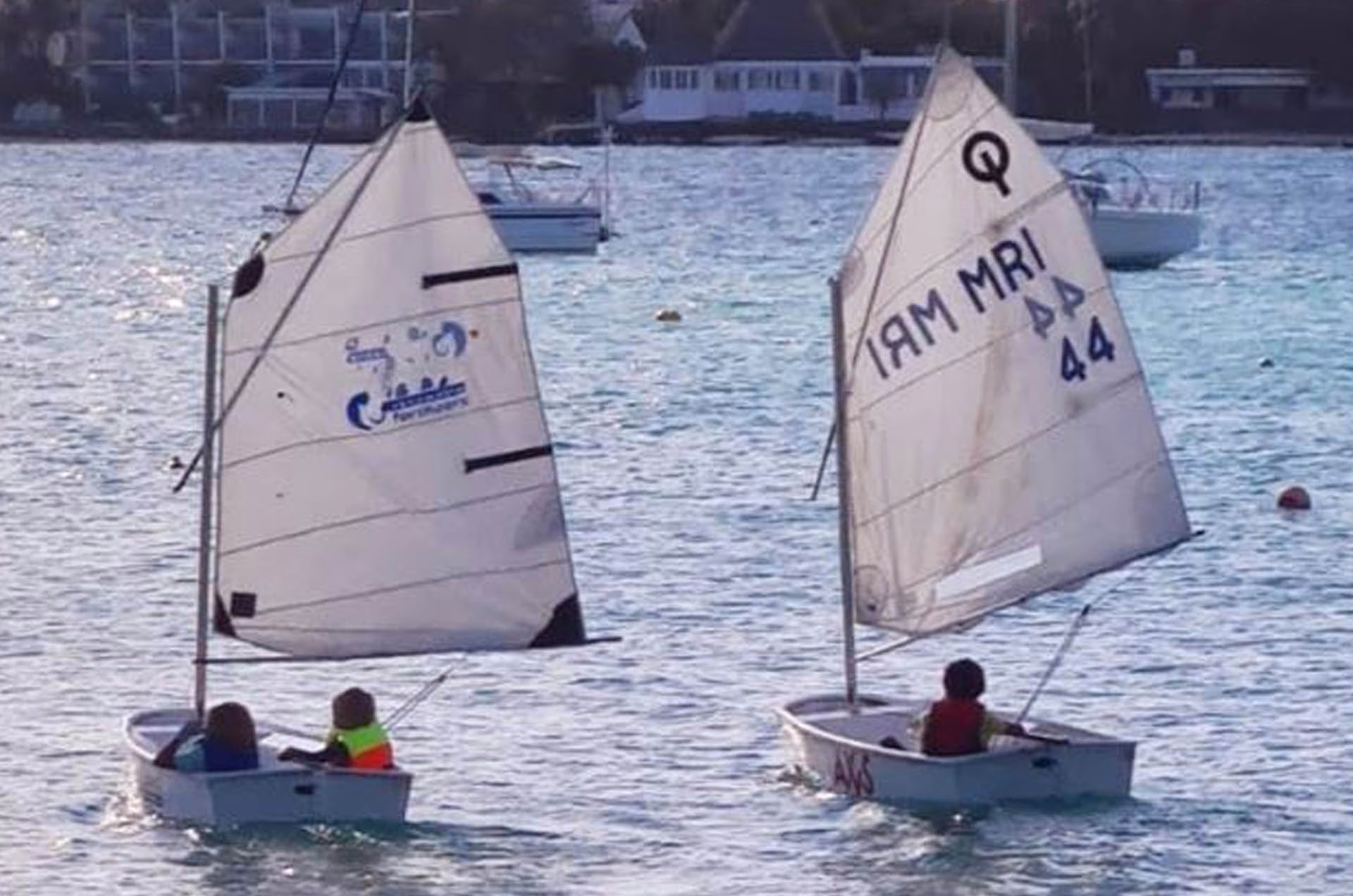
Sailing Community
Discover clubs, associations and organised sailing communities.
Meet the community →
Free Maritime Quizzes
Test your knowledge and continue learning about boating and the sea.
Take a quiz →
Dockyard.mu
Follow current maritime stories, industry activity and new developments.
Explore Dockyard →Selected references.
The historical and sporting milestones in this article were checked against public institutional, sporting and tourism sources.
Sailing has always been part of Mauritius.
From traditional pirogues and Mahébourg regattas to Olympic kitefoil and international freestyle, the story keeps changing — while the island’s relationship with wind and water remains.
